
Early Orthodontic Care for Growing Smiles
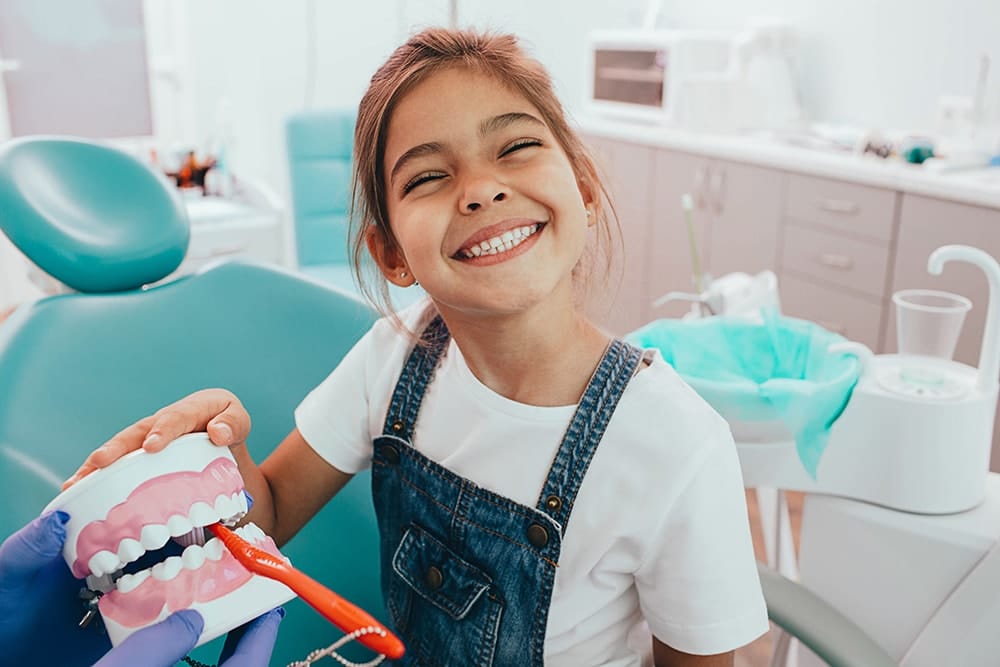
Dental misalignment can begin very early, so most people who receive early orthodontic treatment are children. By addressing concerns early on, it is often easier to treat issues like overbite, underbite, crowding, and crooked teeth. That’s why youth orthodontics in New Jersey is so important; it can eliminate the need for more serious or complex correction later. Dr. Kenneth Banasiak, our extensively trained orthodontist, uses the most advanced techniques available to straighten teeth, helping patients achieve a more beautiful smile while reducing the risk of future oral health problems
What Age Can a Child Get Braces?
The American Association of Orthodontics recommends that children come in for their first orthodontic assessment when their first molars have erupted, typically between the ages of six and seven. When these teeth come into place, a skilled orthodontist can compare the front and back teeth to determine if bite misalignment, crowding, or jaw abnormalities may occur. The Orthodontic Studio offers youth orthodontics in New Jersey because an early diagnosis not only allows us to plan for your child’s healthy future but also to minimize the potential for self-esteem issues that can happen with dental problems. We want your children to feel as confident as possible in their smile for their whole lives.
What Different Types of Braces Are Available for Kids?
Once upon a time, only traditional metal braces were available to straighten teeth. Today, however, there are many innovative approaches. If your child can benefit from braces, we will discuss your options during your initial consultation. One or another technique may be best for your child’s needs and goals, or you may be able to choose from a selection. Some of the orthodontic techniques we offer include the following:
Traditional Metal Braces
Still considered one of the most effective ways to straighten teeth and achieve proper dental alignment, traditional metal braces gradually shift teeth into position using a system of metal brackets and an archwire. Gentle pressure is applied across the teeth to shift them.
Invisalign® Teen
The most popular option for adolescents, Invisalign® Teen, works just like traditional Invisalign®. Using a series of removable clear aligner trays, teeth can be slowly and evenly repositioned to improve bite alignment.
Self-Ligating Braces
Self-ligating braces use a system that provides a more comfortable and efficient way to adjust teeth into the optimal position. These high-quality appliances give you peace of mind during your child’s treatment.
What Is the Orthodontics Process Like for Children?
Every treatment plan is customized to suit the unique needs of the child. Depending on the results of the oral evaluation, our board-certified New Jersey orthodontist may recommend single-phase or two-phase interceptive orthodontics. With years of experience treating patients as young as six, we tailor each program for the most comfortable, effective, and safest outcome, while working with the jaw’s natural development to optimize results. As a result, crowding and permanent tooth removal can be minimized or avoided entirely.
How Much Do Braces for Kids Cost?
Your child’s early orthodontic treatment in Basking Ridge or Mendham is tailored specifically to their needs. As a result, the cost will vary from person to person, child to child. According to the Consumer Guide for Dentistry, the average price for braces for kids ranges from $3,000 to $8,000, but The Orthodontic Studio is committed to meeting customers where they are at. The technique applied to the case’s complexity and other factors will play a role in determining the total expense.
During your initial consultation, we will discuss the particulars of your child’s program with you, including the estimated cost of treatment. We believe everyone deserves to have a healthy, beautiful, and straight smile. Our practice offers a wide array of payment options, including plans with monthly installments, if you are interested. Talk to us about your budget, and we will help you find a suitable way forward.
Want to learn more about braces for kids? Contact our office and speak with our knowledgeable and friendly team members. We provide youth orthodontics in New Jersey from our convenient Basking Ridge and Mendham locations, serving families throughout Somerset and Morris County. The Orthodontic Studio is here to help.
Schedule an appointment with Dr. Banasiak to start your journey towards a straighter, healthier smile. To learn more about our orthodontic options, contact The Orthodontic Studio in Basking Ridge and Mendham, NJ, today for more information.
Frequently Asked Questions about Youth Orthodontics
How long does orthodontic treatment usually take for teenagers?
Most teens complete orthodontic treatment in 18 to 24 months, though timelines can range from about 12 months for minor corrections to three years for complex bite or alignment issues. Treatment length depends on the type of appliance, how crowded or misaligned the teeth are, and how consistently your teen follows care instructions. Traditional metal and ceramic braces typically fall in the 18-to-24-month range. Invisalign Teen can sometimes finish faster for cooperative patients but requires wearing the aligners 20 to 22 hours a day; skipping wear time extends treatment. Self-ligating braces may shorten the process slightly by requiring fewer adjustments. Your orthodontist will give a personalized estimate at the initial consultation. Learn more about our full range of options on our Orthodontic Treatment page.
Will my teen actually wear Invisalign as directed?
Compliance is the biggest question with Invisalign Teen, since the aligners only work when worn 20 to 22 hours a day and taken out only for meals, brushing, and drinking anything besides water. To help parents and orthodontists track this, Invisalign Teen aligners come with small blue compliance indicators that gradually fade from blue to clear as the aligners are worn, giving a visible check on wear time. The system also includes up to six free replacement aligners in case any are lost or damaged, which happens fairly often with teens. Most teens do well once they see progress in the first few weeks. If wear-time is a serious concern, ceramic or self-ligating braces are a good alternative since they can’t be taken out, keeping treatment on schedule.
What happens if my teen loses or breaks an Invisalign aligner or a bracket?
For a lost or broken Invisalign aligner, have your teen put the previous aligner back in right away to keep teeth from shifting, then call the orthodontist. Invisalign Teen includes up to six free replacement aligners built into most plans, so most losses can be handled without extra cost or extending treatment. For a broken bracket, loose band, or poking wire, save any pieces that come off and cover any sharp edges with orthodontic wax to protect the cheeks and lips until the office can be seen. Contact the office within a day or two, most bracket repairs are quick and don’t require rescheduling long visits. Waiting too long lets teeth drift and can add weeks to treatment. Visit our Emergency Care page for what to do outside office hours.
Should my teen have wisdom teeth removed before or after getting braces?
In most cases, wisdom teeth are evaluated separately from orthodontic treatment and often removed after braces come off, not before. Research does not support the older belief that erupting wisdom teeth push front teeth out of alignment and cause relapse, so their presence doesn’t usually change the timing of braces or Invisalign. That said, if wisdom teeth are impacted or causing pain, crowding, or infection risk, your general dentist or oral surgeon may recommend removal on their own schedule regardless of orthodontic treatment. The orthodontist and oral surgeon typically coordinate so that any surgery happens after active braces treatment finishes and doesn’t interfere with retainer wear. Ask both providers to weigh in, since the decision depends on how the wisdom teeth are erupting on X-rays. Panoramic imaging done during orthodontic evaluation often shows exactly what’s coming in.
Are ceramic braces or Invisalign a better choice for a self-conscious teen?
Both are strong options for a self-conscious teen, but Invisalign is generally the more discreet of the two. Clear aligners are nearly invisible from a normal conversational distance, and they can be removed for photos, dances, and other big moments. Ceramic braces use tooth-colored brackets so they’re much less obvious than metal but are still visible up close and can stain if your teen loves coffee, tea, or dark sodas. The trade-off is compliance and case complexity. Invisalign only works when worn 20 to 22 hours a day, and it’s best suited to mild-to-moderate alignment issues. Ceramic braces stay on and can handle more complicated bite corrections. For a teen who’s disciplined about wear time and has a straightforward case, Invisalign usually wins for aesthetics; for complex cases or teens who forget to put trays back in, ceramic braces are the safer call.
Do braces or Invisalign damage tooth enamel or cause cavities in teens?
Braces and Invisalign don’t damage enamel on their own, but they can raise the risk of cavities and white-spot lesions (permanent chalky marks) if teeth aren’t kept clean during treatment. Food and plaque trap around brackets and under aligner trays, and sugar or acid held against enamel for hours is where the trouble starts. To prevent this, teens should brush after every meal and floss daily during braces, and rinse the mouth and clean aligners before putting them back in. Cutting back on sugary drinks, sports drinks, and constant snacking makes the biggest difference. Regular six-month cleanings with the general dentist should continue throughout orthodontic treatment. Once braces come off, enamel underneath is unchanged as long as good hygiene was maintained. Visit our Braces Academy for day-to-day care tips.
Will my teen need to wear a retainer after braces come off, and for how long?
Yes, every teen needs to wear a retainer after braces or Invisalign, teeth naturally try to shift back toward their original position for months and even years after treatment, and a retainer is the only thing that stops that. Most orthodontists recommend wearing a removable retainer full-time (about 22 hours a day) for the first three to six months after treatment ends, then transitioning to nights only. Nighttime wear then continues indefinitely, essentially for life, to hold results. Some patients get a fixed retainer bonded to the back of the lower front teeth, which stays put permanently and doesn’t rely on compliance. Losing or skipping retainer wear is the number-one reason teens end up needing a second round of orthodontic treatment as adults. Learn more on our Retainers page.
Can we plan my teen's orthodontic treatment around prom, senior photos, or graduation?
Yes, treatment timing can often be planned around big milestones like prom, senior photos, homecoming, and graduation. If your teen wants braces off in time for a specific event, share that date early, ideally at the initial consultation, so the timeline can be built around it. For events falling in the middle of treatment, Invisalign Teen offers the easiest workaround, since aligners can be removed for photos or a few hours during the event and then put back in. With traditional braces, choosing clear elastic ties or ceramic brackets makes them less obvious in pictures. Debonding (braces removal) followed by same-day retainer placement can typically be scheduled with a few weeks’ notice, so building in cushion time before the milestone helps avoid last-minute stress. Just be aware that rushing treatment isn’t safe if teeth haven’t finished moving.
What happens if my teen starts college during treatment, can care be transferred to another orthodontist?
Yes, orthodontic care can be transferred to another orthodontist if your teen leaves the area for college mid-treatment. Your current orthodontist will provide a transfer letter, current treatment records, X-rays, digital scans or study models, and an estimate of remaining treatment time and cost. The new orthodontist reviews everything and takes over from there. That said, many local families prefer to keep treatment with our practice and schedule adjustment visits during school breaks, most treatment plans can be adjusted to work around a college schedule if visits fall roughly every 8 to 12 weeks. Discuss the plan at your consultation so we can build the appointment cadence around expected college moves. Any transfer will involve a new-patient fee at the receiving practice and possibly a revised treatment estimate, so it’s worth comparing both options.
Where can I find a teen orthodontist near Basking Ridge or Mendham, NJ?
The Orthodontic Studio provides teen orthodontics at two convenient New Jersey locations. Our Basking Ridge office is at 65 S Maple Ave, Basking Ridge, NJ 07920 (908-766-2444), and our Mendham office is at 5 Cold Hill Rd S., Unit 12, Mendham, NJ 07945 (973-543-6644). Both offices are led by board-certified orthodontist Dr. Kenneth Banasiak, a repeat New Jersey Monthly Top Dentist honoree, and we serve teen patients throughout Somerset County, Morris County, and surrounding communities including Bernardsville, Bedminster, Chester, and Morristown. We offer traditional metal braces, ceramic braces, self-ligating braces, and Invisalign Teen so every teen can find a treatment that fits their lifestyle. To schedule a consultation, call the office nearest you or request an appointment online.